Food
Cortiva supplies case forming, packing and closing machines, compact and custom palletizing cells and stretch wrapping systems for the end of food lines. Cells are designed by reading the cleaning regime and the format list together.

In food production the end of the line answers to the same hygiene discipline as everything upstream. Equipment has to be cleanable, not just fast: the end-of-shift washdown reaches the machine and the floor around it.
The second driver is variety. A single line runs different case, tray and pallet configurations, and changeover happens more than once per shift. Cortiva designs these cells by reading the cleaning regime and the format list together.
The industry's challenge, Cortiva's answer
End-of-shift washdown exposes end-of-line equipment to water and cleaning chemicals.
Cell layout is designed alongside the cleaning regime: surfaces, enclosures and access points follow the washdown requirement.
One line runs several case and tray formats, with changeovers repeating during the shift.
Changeover is a recipe selection rather than a mechanical adjustment: case configuration and pallet pattern are called up from the HMI.
Seasonal demand shifts line rate and shift count significantly through the year.
The end of line is sized for peak demand, with infeed and buffering planned to absorb the busy season without adding shifts.
Products are light and easily crushed, and arrive randomly positioned on the conveyor.
Vision-guided picking handles randomly presented product, and the vacuum gripper is specified to lift delicate items without crushing them.
Systems used in this industry
-
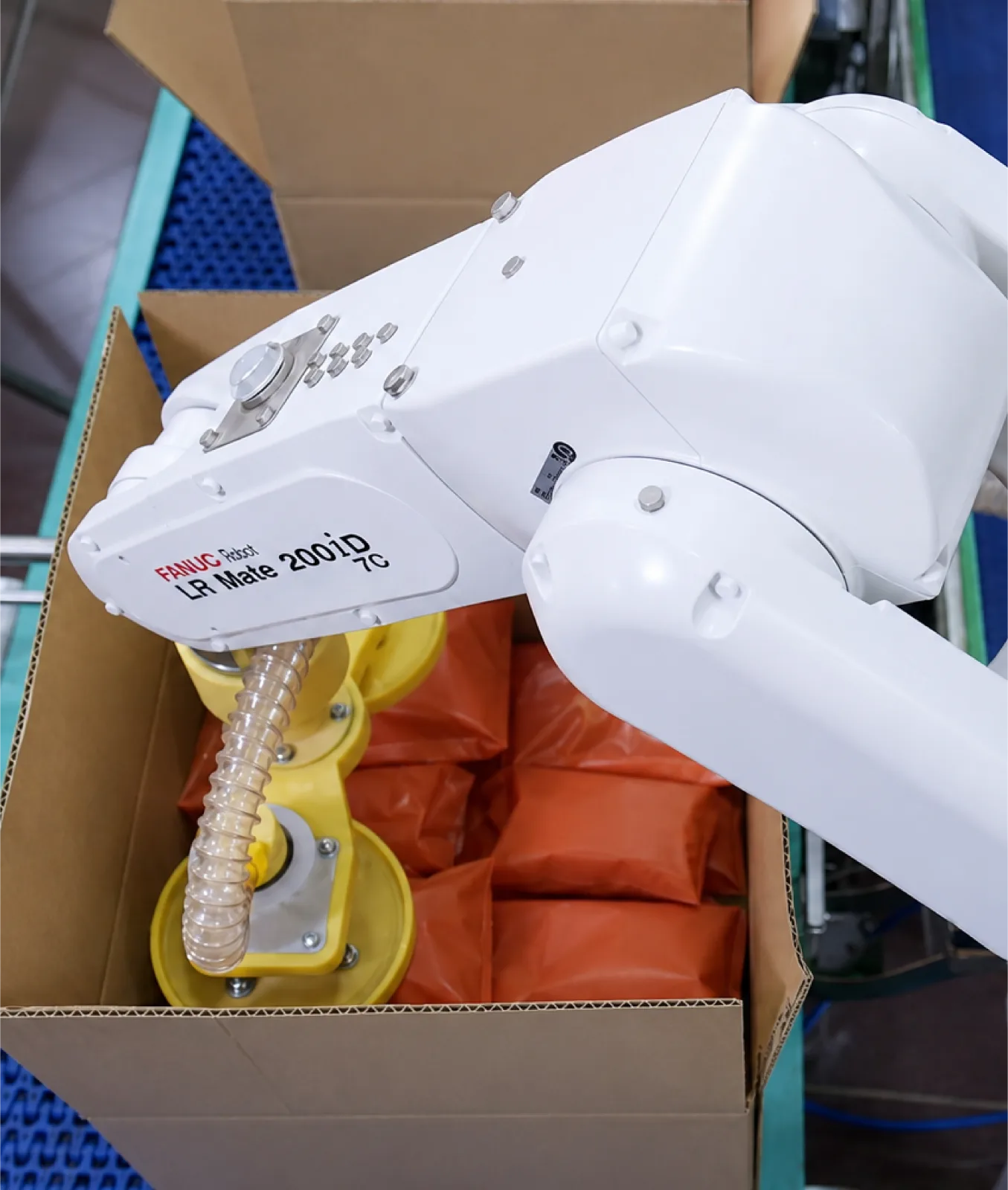 Secondary Packaging
Three-stage secondary packaging systems: case, carton and tray forming, product loading, and case closing.
-
 Palletizing
From cobot cells to high-level palletizers: robotic palletizing and depalletizing for cases, bags, pails and drums.
-
 Pallet Packaging
Stretch wrapping, stretch hood and vertical/horizontal strapping: securing the pallet for the journey ahead.
Which end-of-line step do we automate in this industry?
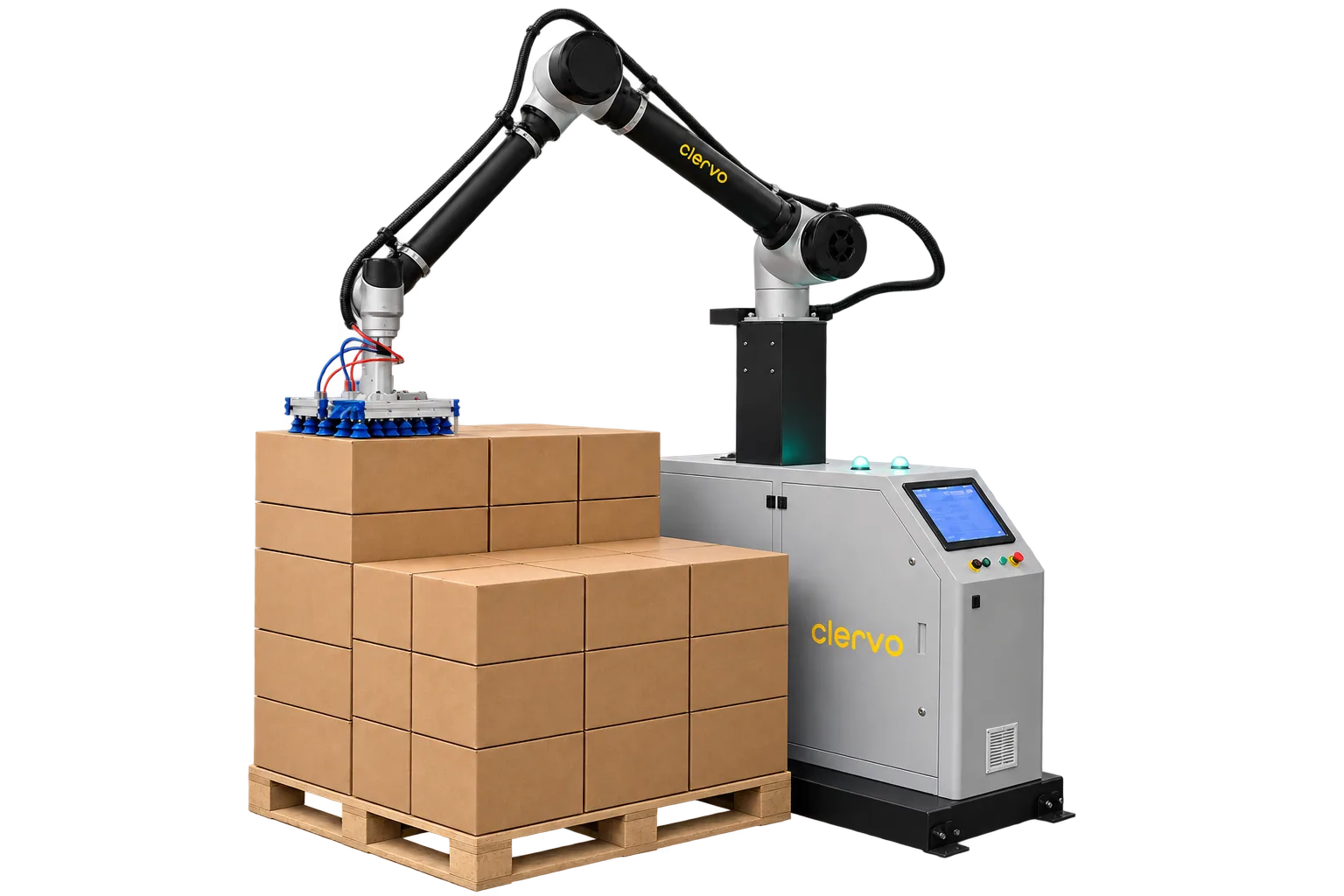 Compact Palletizer
A fully enclosed compact cobot palletizing cell in two frame sizes (Standard and XL), handling up to 50 kg and pallets up to 2850 mm.
View Details
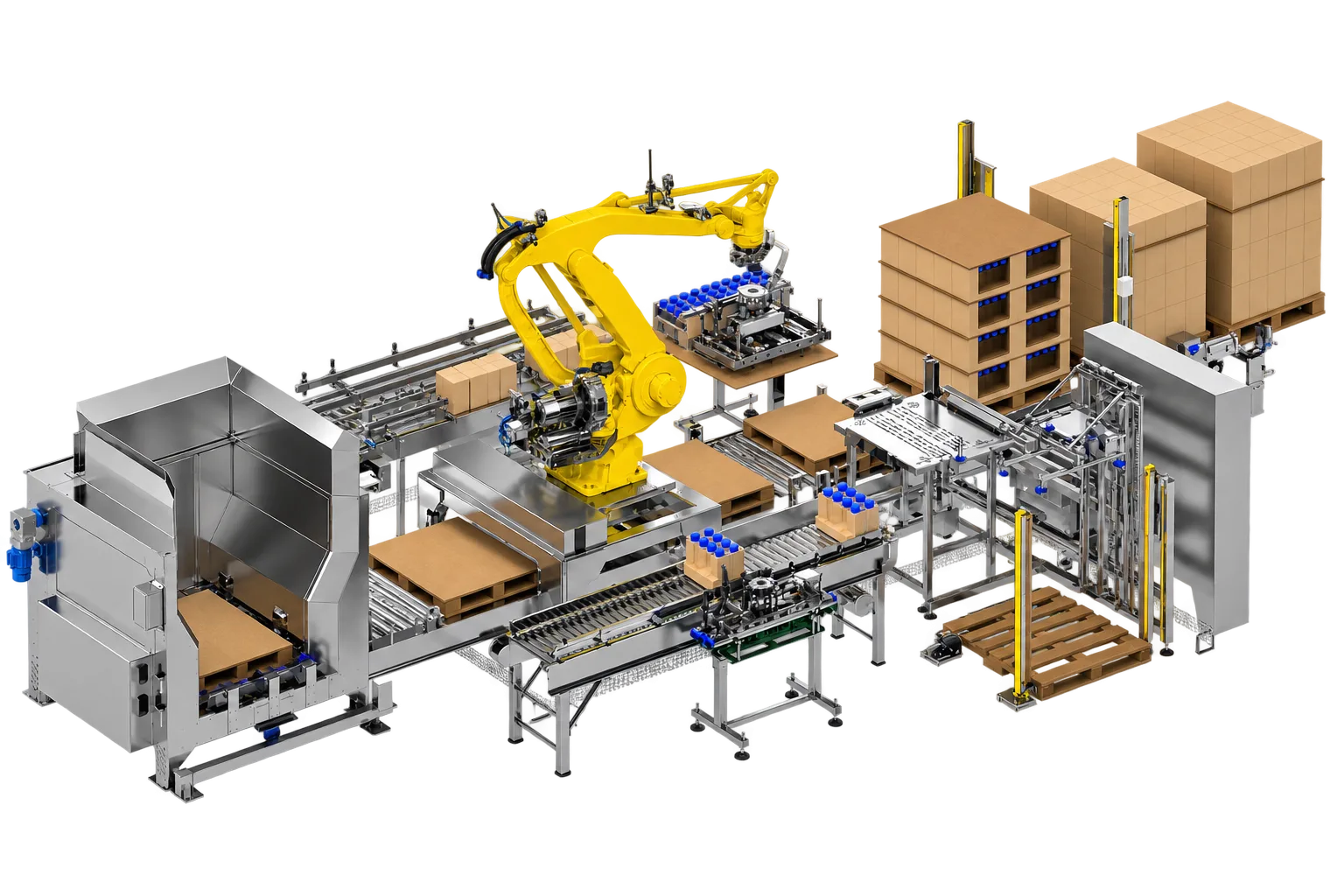 Custom Palletizing
Purpose-built palletizing cells: single or multiple infeed, unit, row or layer picking, products up to 57 kg and pallets up to 2743 mm.
View Details
 Stretch Wrapping
Pallet wrapping with stretch film, where load stability and film consumption are set in the same recipe.
View Details
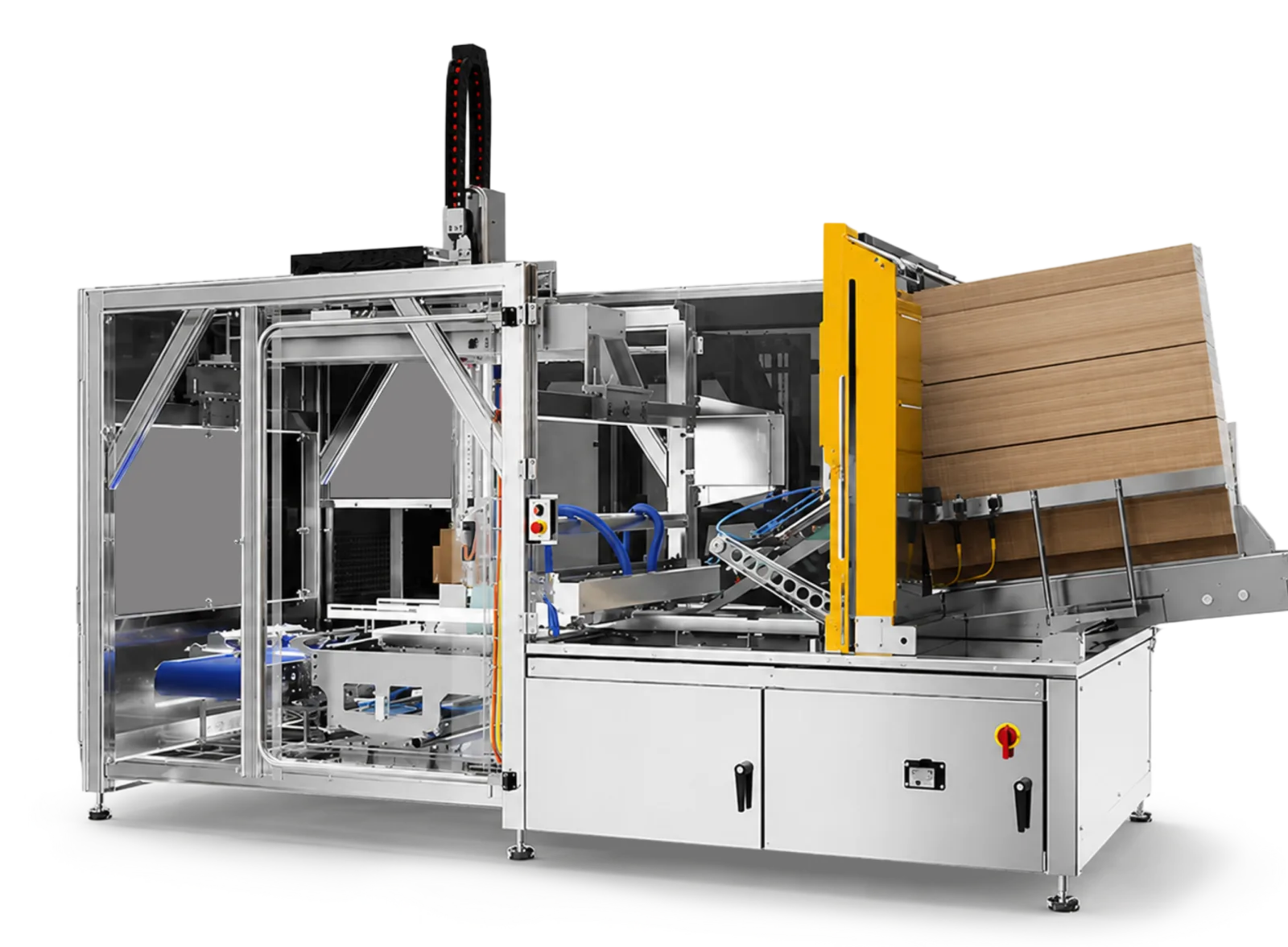 Forming
Case, Carton & Tray Forming
Forming up to 35 cases per minute from flat blanks: cases, cartons and trays, with hot melt glue or tape.
View Details
 Packing
Case, Carton & Tray Packing
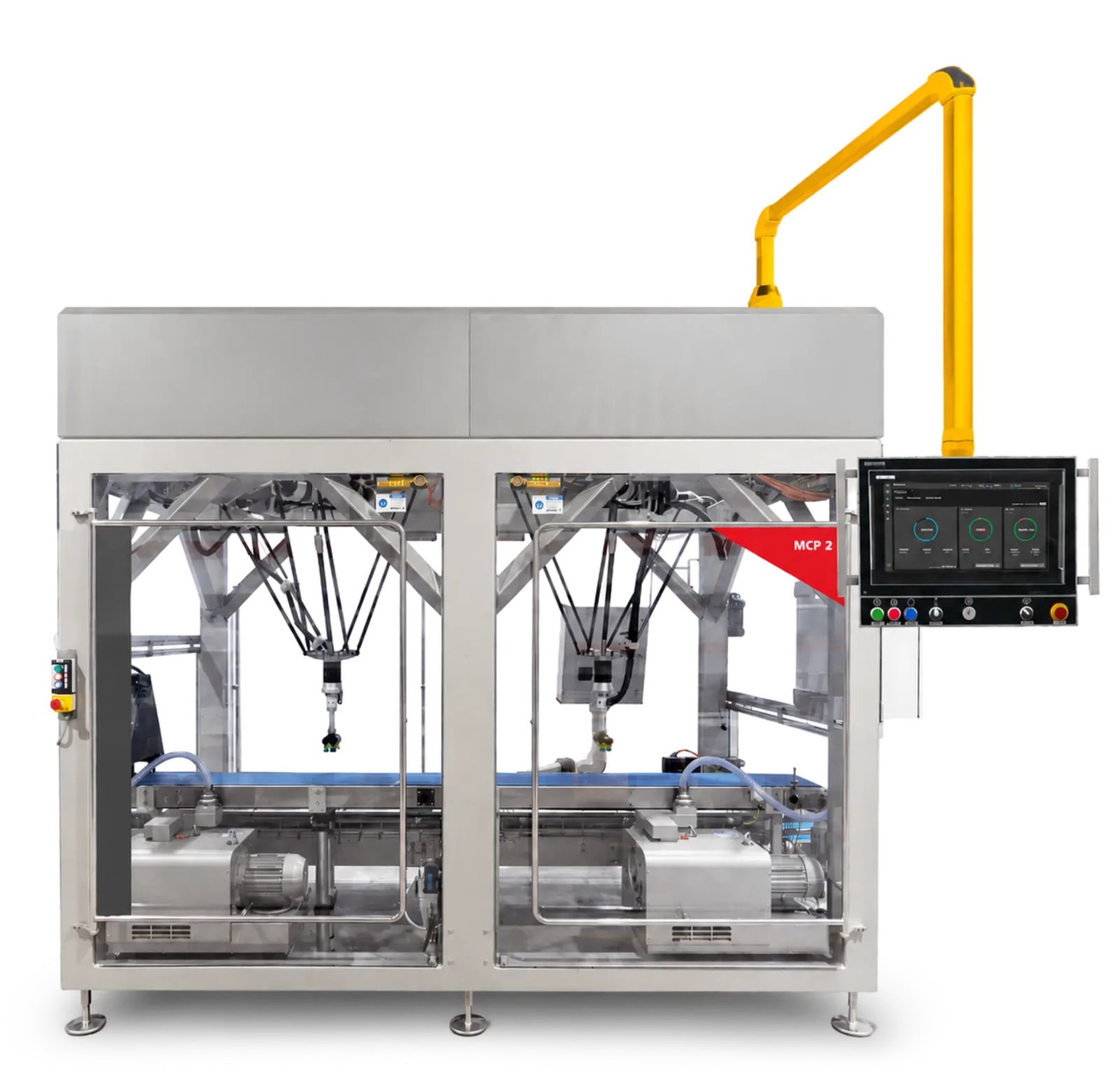
Vision-guided packing at up to 165 products (18 cases) per minute, built for multi-format production.
View Details
 Closing
Case, Carton & Tray Closing
Closing filled cases at up to 42 per minute with hot melt glue or tape, across multiple case formats.
View Details
Which line do these machines come together on in this industry?
Example Configuration These are typical system architectures, not records of delivered projects. See Case Studies for completed installations.
-
Food & Confectionery Packaging Line
An example end-of-line architecture for food and confectionery: case forming, vision-guided product packing, case closing, recipe-based palletizing and stretch wrapping run as one flow. This page describes a typical configuration, not a record of a delivered project.
- Secondary Packaging
- Palletizing
- Pallet Packaging
About food lines
Yes. Mixed palletizing, vertical strapping and horizontal strapping systems are frequently used in the food industry.
Stretch wrapping focuses on stable load securing and optimised film use. Where loads risk shifting or tipping in transport, vertical strapping ties the load to the pallet, and horizontal strapping holds the product layers together around the load.
Let us build your project around this industry's requirements.
Send us your product and pack dimensions, target throughput and layout drawing; we respond with feasibility and scope.