Vertical Strapping
A strapping station that binds the load to the pallet on the vertical axis.
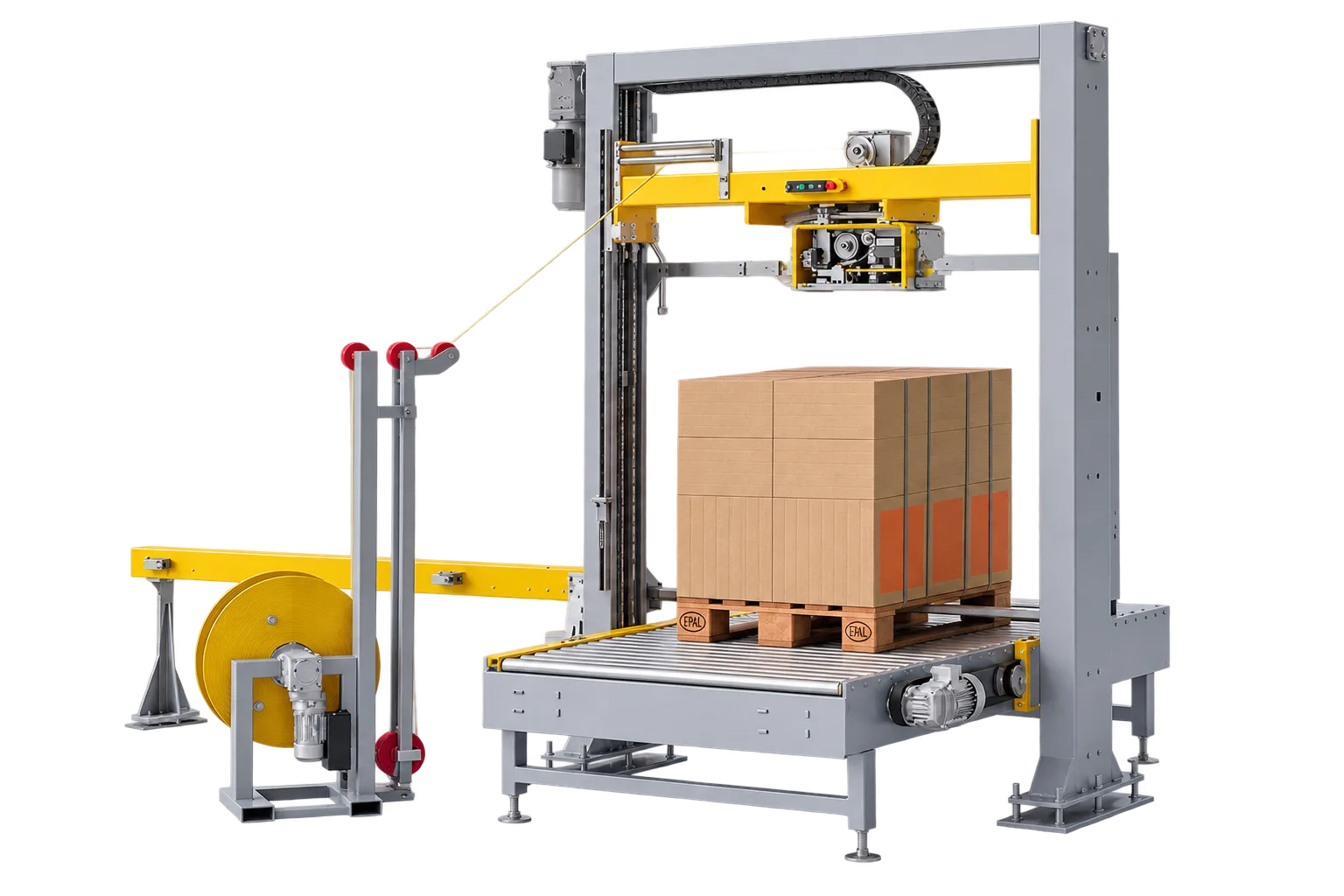
- Binds the load to the pallet on the vertical axis
- Strap count and tension set per load
- Works together with edge protectors (corner boards)
- Can be added to a stretch wrapping line
Vertical strapping passes the strap over the load and under the pallet base, tying the two together so the load stays put when a forklift picks the pallet up.
Strap count and tension follow the weight and crush resistance of the load. For pressure-sensitive products the station works together with edge protectors, also called corner boards.
It can share a line with stretch wrapping: the film holds the load together, the strap ties it to the pallet.
Vertical or horizontal? Vertical strapping ties the load to the pallet, so it is the right choice when the concern is the load shifting or toppling while the pallet is moved. Horizontal strapping compresses the layers against each other and stops individual cases separating. On tall, multi-layer and lightweight loads the two are used together.

Flexible & High-Speed Operation
Maximum Load Stability
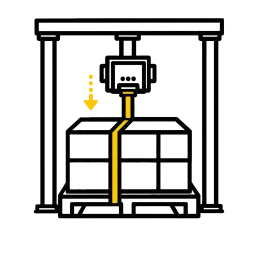
Automatic Vertical Strapping
Does your load need tying to the pallet?
Share your load weight, product crush resistance and pallets per hour, and we will set strap count and tension together.
Other systems in the Pallet Packaging family
-
 Stretch Wrapping
Pallet wrapping with stretch film, where load stability and film consumption are set in the same recipe.
Stretch Wrapping
Pallet wrapping with stretch film, where load stability and film consumption are set in the same recipe.
-
 Stretch Hood
A heat-free stretch film hood that closes over the top and all four sides of the load in one piece.
Stretch Hood
A heat-free stretch film hood that closes over the top and all four sides of the load in one piece.
-
 Horizontal Strapping
A station that straps the pallet load around its perimeter, tying the layers to each other.
Horizontal Strapping
A station that straps the pallet load around its perimeter, tying the layers to each other.
Every system in one document
All four solution families machine by machine, with throughput ranges and pallet dimensions. See what is inside before you download it.