Gripper Technologies
The interface between robot and load: vacuum, clamp, combined and layer grippers, engineered for the application.
The technology's role in the cell
Choosing the robot does not solve the problem on its own. What decides whether a cell works is the interface between the load and the robot: the gripper. The same robot drops cases with the wrong end effector and handles bags and pails alike with the right one.
Cortiva therefore treats the gripper as a critical part of the application rather than a catalogue accessory. Surface, weight, available gripping area and release behaviour together determine the gripper type; where layer-by-layer handling applies, solutions that move a full layer per cycle come into play.
Capabilities
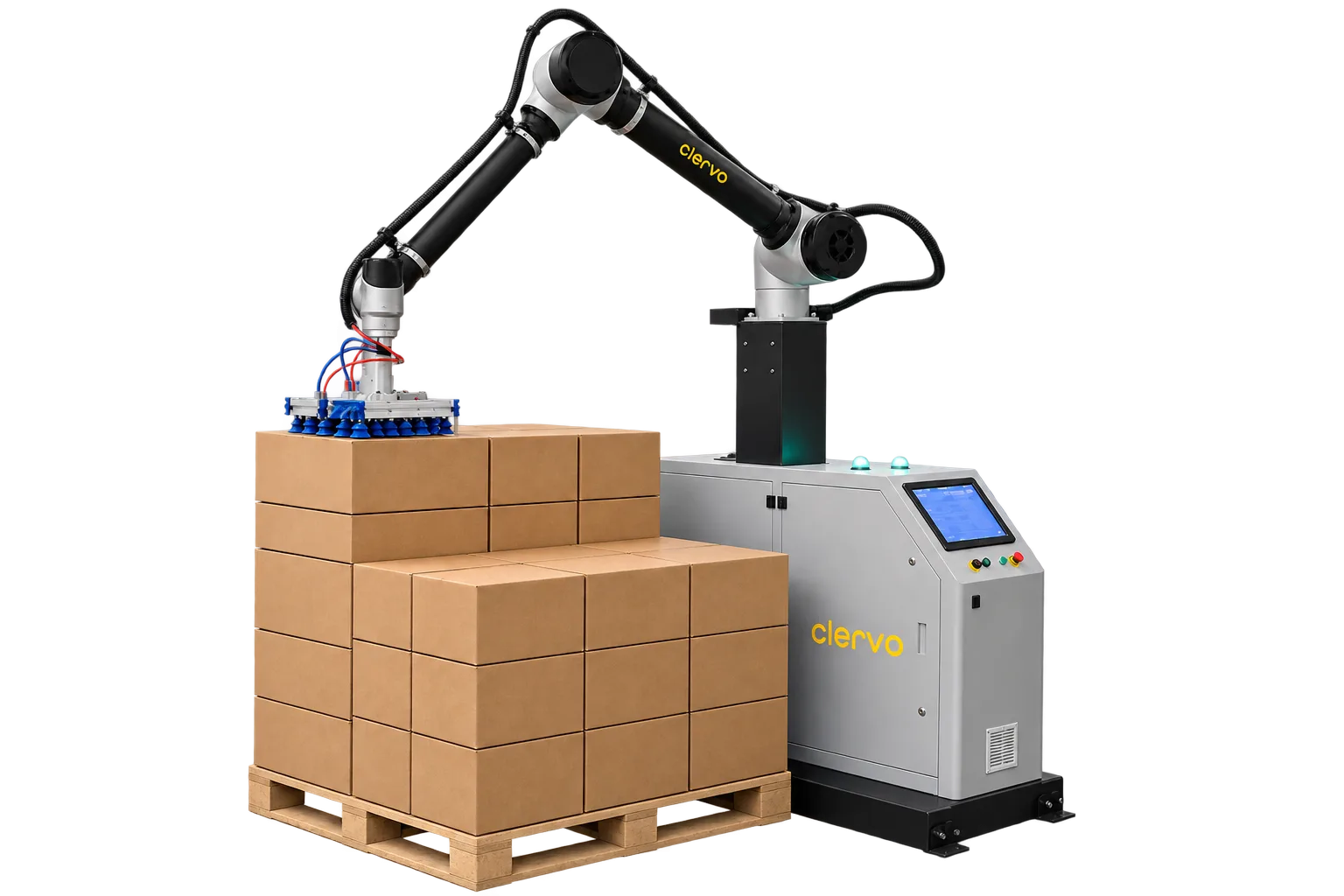
- Vacuum gripper: cases, cartons and trays with flat, non-porous surfaces
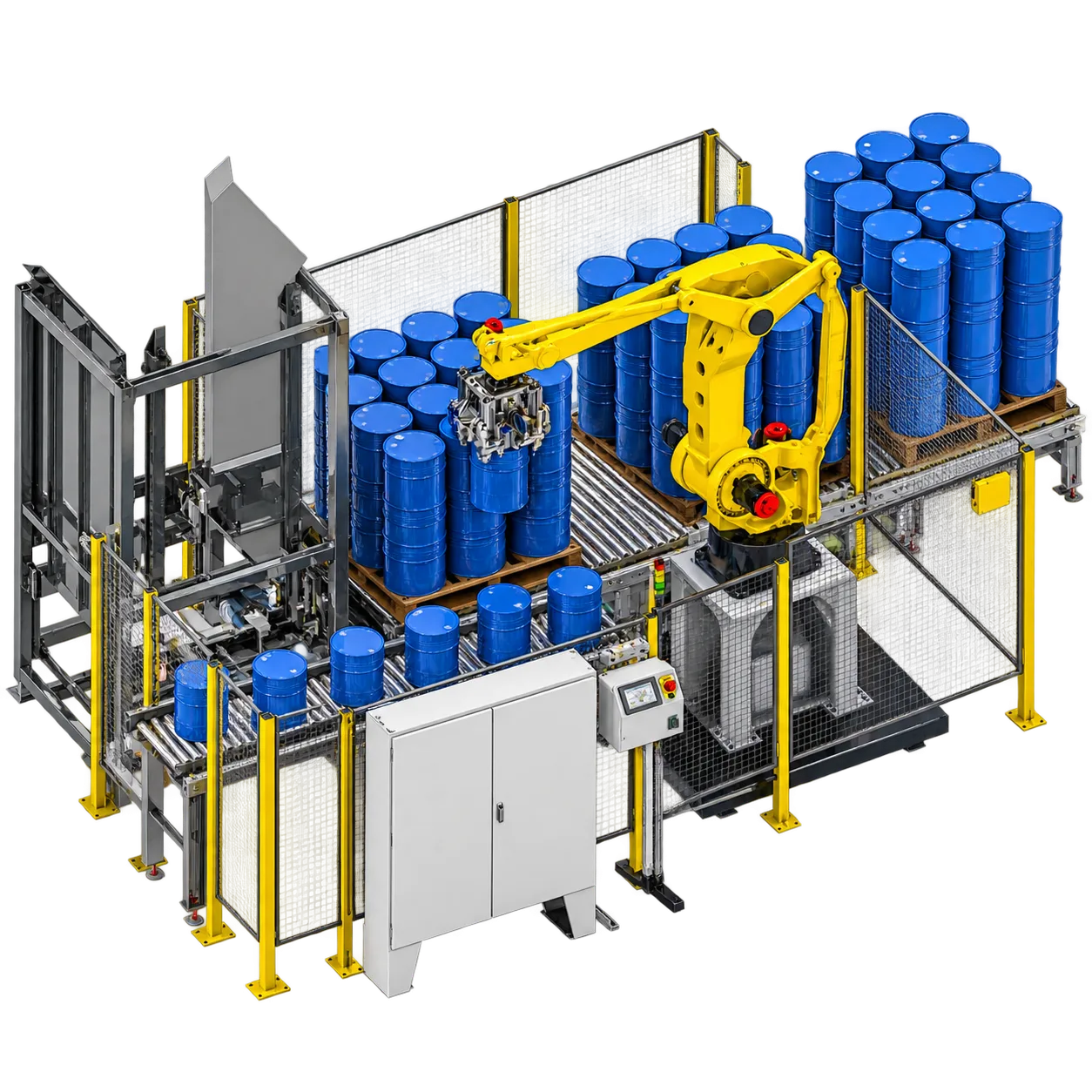
- Clamp gripper: pails, drums and block loads that need to be gripped from the side
- Combined vacuum and clamp: cells that handle more than one product type
- Layer gripper: high-throughput palletizing where a full layer moves in one cycle
- Bag-specific gripper: holding arrangements designed for soft loads that change shape
The gripper is not an accessory; it is part of the application.
-
Order of decisions
Application-specific gripperGripper selection comes before system selection; the cell is laid out once the gripping decision is settled.
Off-the-shelf end effectorThe robot and the cell are chosen first, and the end effector is added afterwards.
-
Different product types in one cell
Application-specific gripperA combined vacuum and clamp gripper handles cases, pails and drums in the same cell.
Off-the-shelf end effectorEach product type needs its own holding arrangement, and usually its own station.
-
Loads that change shape
Application-specific gripperA bag-specific holding arrangement is designed around the flexible surface.
Off-the-shelf end effectorAn end effector that assumes fixed geometry cannot hold a bag that deforms after filling.
-
Layer-by-layer palletizing
Application-specific gripperA layer gripper moves a full layer in one cycle.
Off-the-shelf end effectorUnit picking cannot keep up beyond a certain rate.
Holding force, changeover time and repeatability are calculated per application and stated in writing within the project.
Which type for which product?
Surface, available gripping area and release behaviour decide the type. Below, how each one grips sits next to what it typically handles.
Vacuum gripper
Grips from above with a suction cup group and runs fast on light products with a smooth surface. Typically handles: cartons, slip sheets, thin packaging.
Clamp gripper
Grips by squeezing the product from the sides and can pick a layer or a row at a time. Typically handles: cases, boxes, crates, water carboys.
Combined gripper
Brings two or more gripping principles together in one body, so no tool change is needed when the product changes. Typically handles: lines that run more than one product type.
Layer gripper
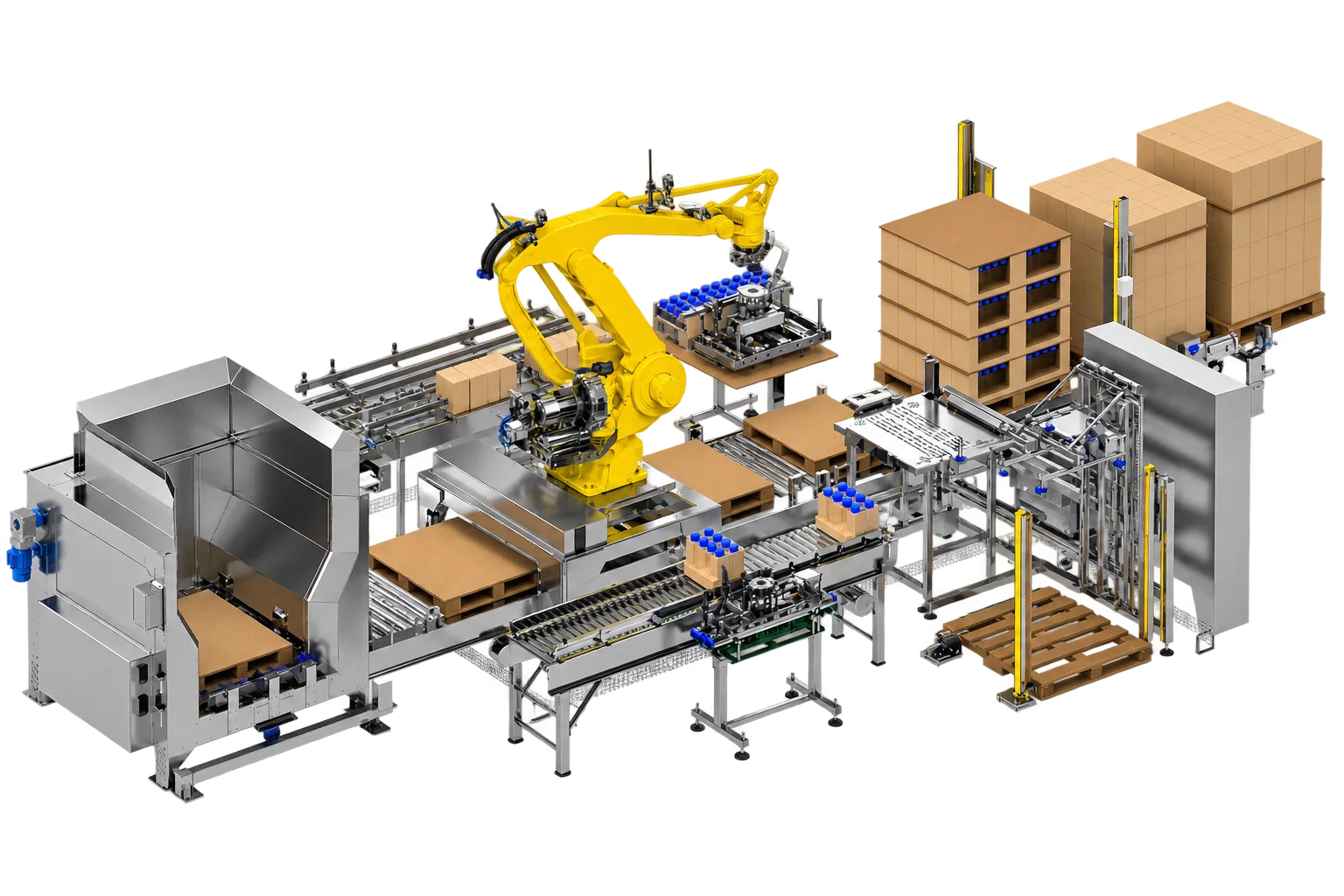
Picks a full, pre-arranged layer as one piece and slides it onto the pallet across a roller bed. Typically handles: high-throughput case and box palletizing.
Bag gripper (claw type)
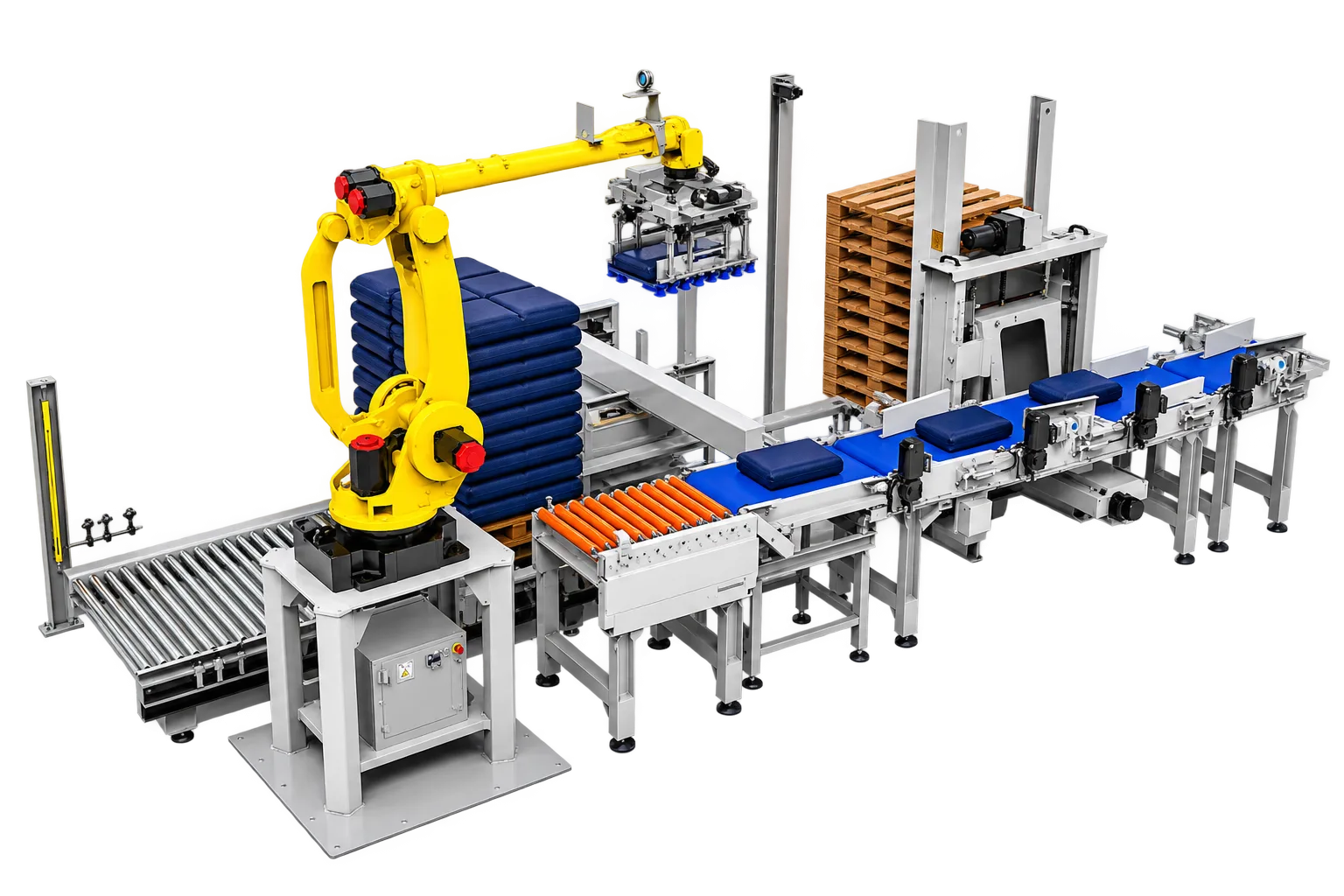
Takes the bag with a claw mechanism that supports it from underneath and sets it down on the pallet under control. Typically handles: bags of flour, feed, cement and food ingredients.
Products that carry this technology
Related Articles
See this technology on your own part.
We start from your product and line conditions, then evaluate the results together.