Secondary Packaging
Three-stage secondary packaging systems: case, carton and tray forming, product loading, and case closing.
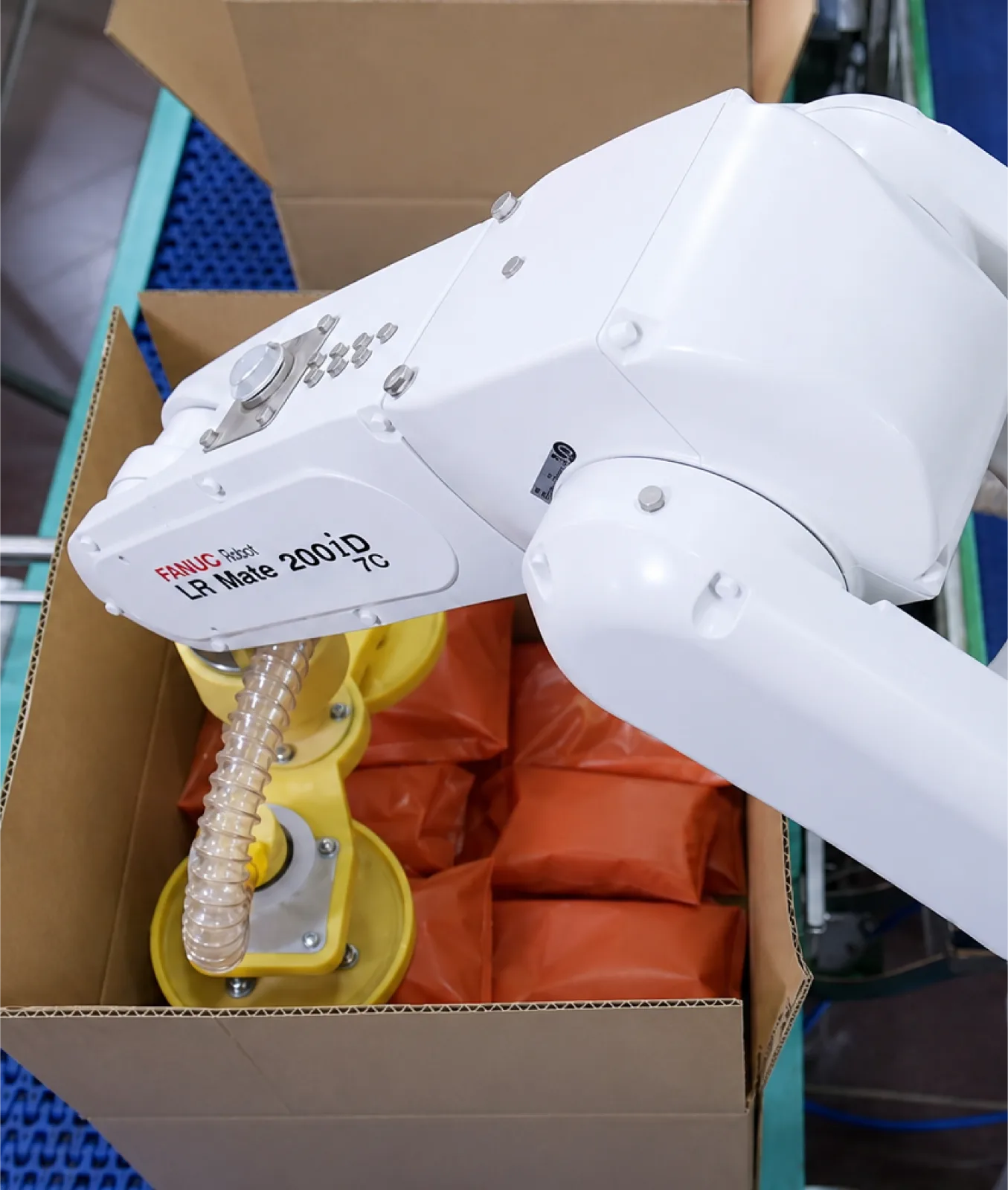
Position in the solution family
- 01 Secondary Packaging
- 02 Palletizing
- 03 Pallet Packaging
- 04 Transport & Storage
- 01 Secondary Packaging
- 02 Palletizing
- 03 Pallet Packaging
- 04 Transport & Storage
Secondary packaging is where the product is grouped for handling and shipment after primary packaging. Cortiva builds this stage in three steps: forming, packing and closing.
The three steps can be delivered as one continuous line or as individual stations added to an existing one. What decides the layout is your case format, line speed and how the product can be gripped.
- Hot melt and tape options supported on the same line
- Vision-guided picking handles randomly presented product
- Format changeover by recipe rather than mechanical adjustment
Machines in the Secondary Packaging family
-
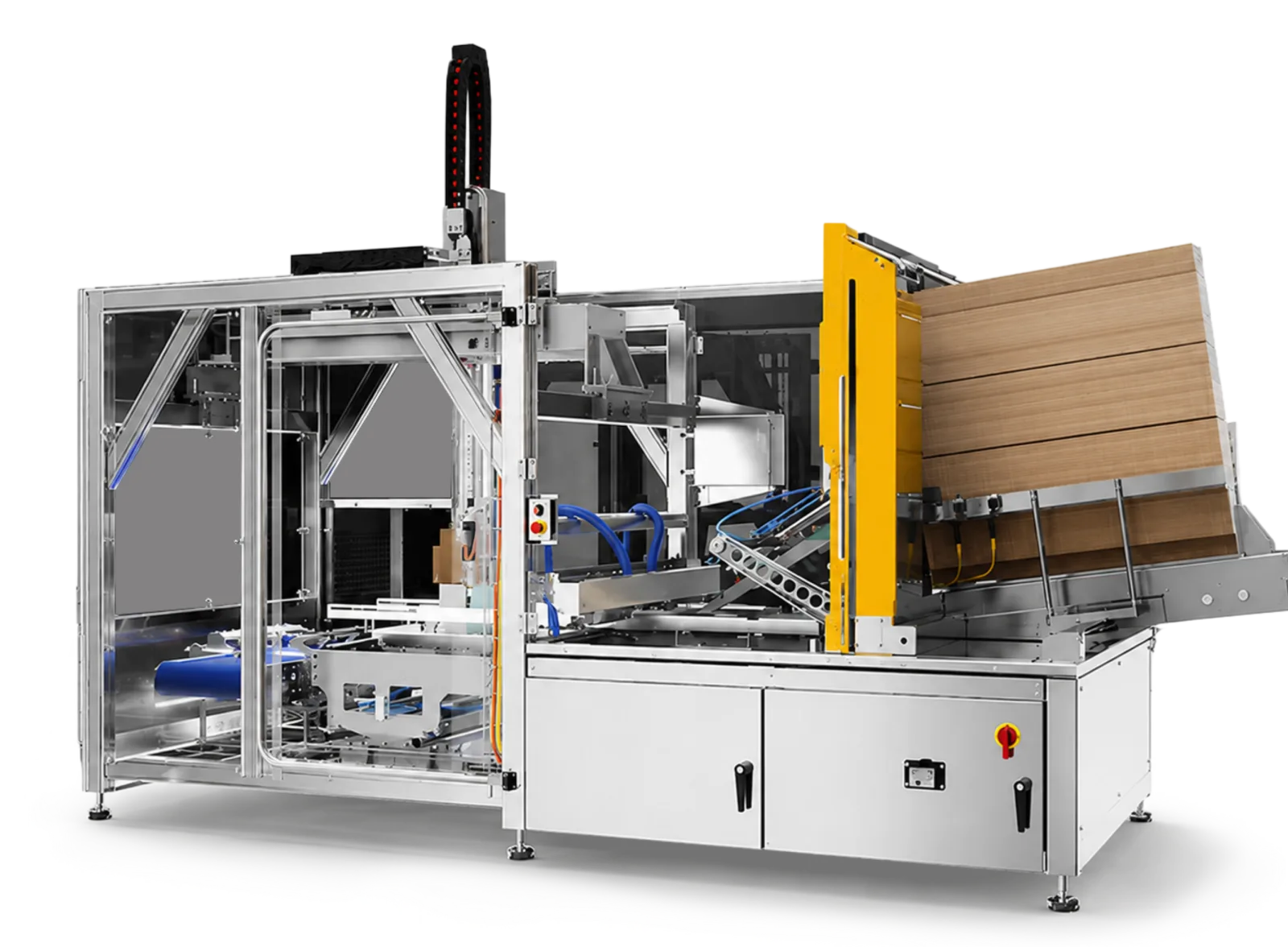
Case, Carton & Tray Forming
Forming up to 35 cases per minute from flat blanks: cases, cartons and trays, with hot melt glue or tape.
- Capacity
- up to 35 case/min
- Sealing
- Hot melt glue or tape
-
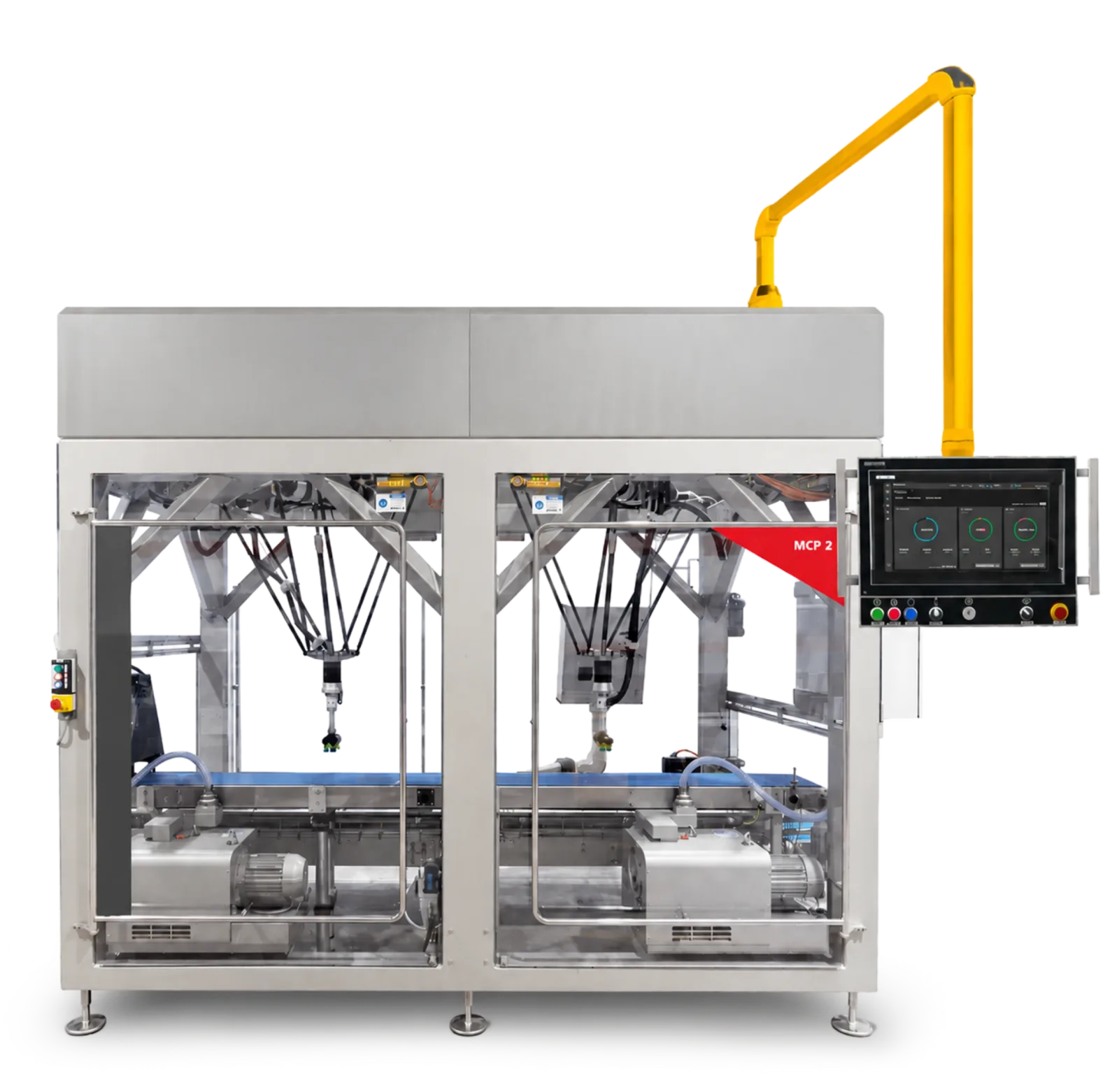
Case, Carton & Tray Packing
Vision-guided packing at up to 165 products (18 cases) per minute, built for multi-format production.
- Capacity
- up to 165 PPM / 18 CPM
- Format
- Multi-format
-

Case, Carton & Tray Closing
Closing filled cases at up to 42 per minute with hot melt glue or tape, across multiple case formats.
- Capacity
- up to 42 case/min
- Closing method
- Hot melt glue or tape
Where this family operates
- Case, carton and tray forming
- Vision-guided product grouping and packing
- Closing with hot melt adhesive or tape
- Automatic format changeover for multi-format production
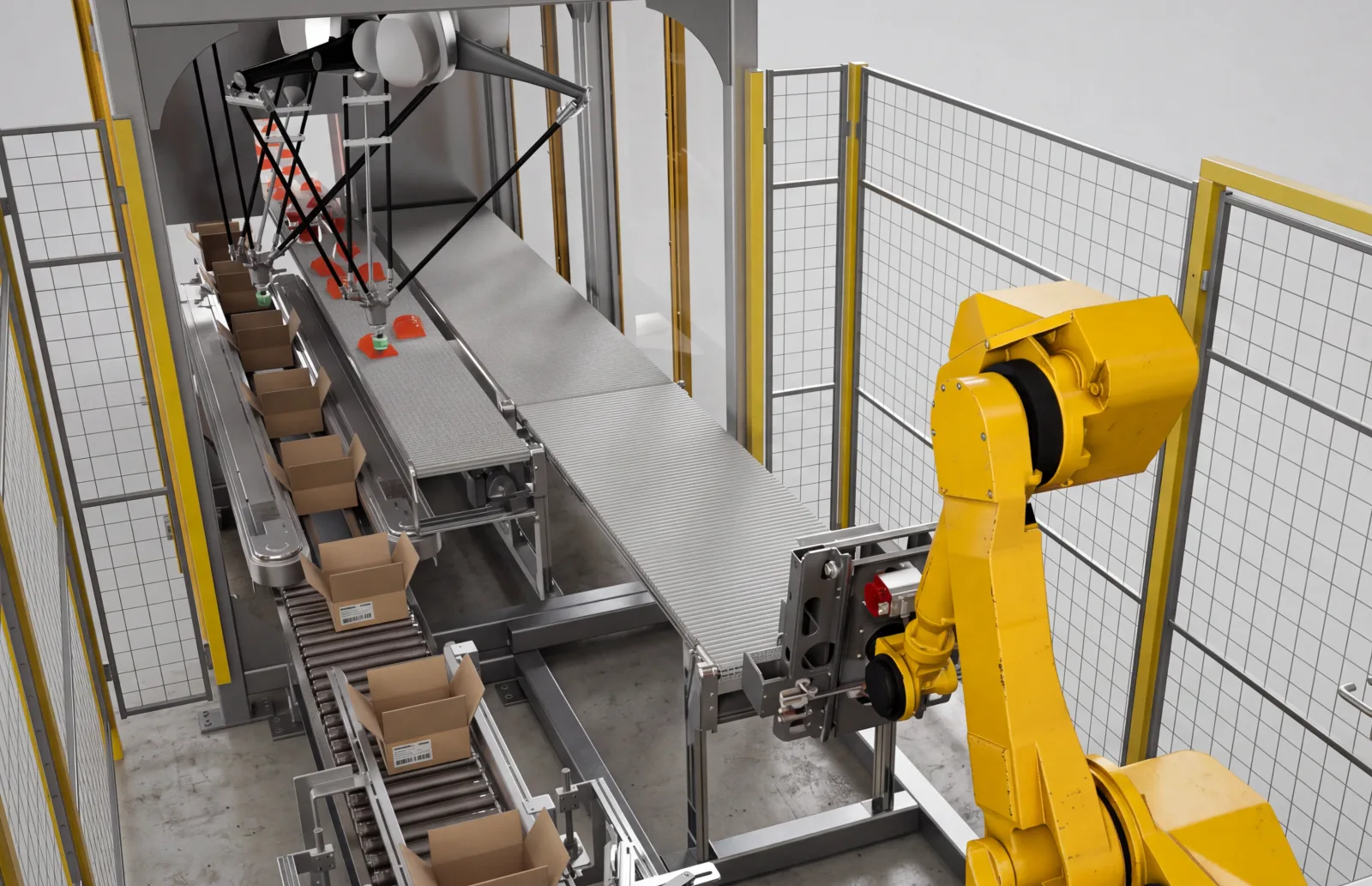
Three stages, three stations


Questions that come up when building a secondary packaging line
No. Forming, packing and closing can be delivered as one line or as individual stations added to an existing one. Which station comes first follows your case format, line speed and how the product can be gripped.
Both are supported on the same line, and the choice follows the case format and production conditions. The method does not have to be fixed up front.
Vision-guided picking reads the product position on every cycle. The alternative, mechanical guides, aligns the product at the cost of both speed and format flexibility; vision-guided picking avoids that cost.
Changeover is a recipe selection rather than a mechanical adjustment: case configuration and pallet pattern are called up from the HMI. Changeovers that repeat within a shift therefore do not turn into line downtime.
Every system in one document
All four solution families machine by machine, with throughput ranges and pallet dimensions. See what is inside before you download it.
Let us engineer this system around your part.
Apply with your part drawing and output target; we respond with layout and scope.